
How I Supercharged AI-Assisted Game Dev with a Custom Go CLI and $20-a-Month AI
Developing a 2D indie game like Cloudstrike comes with strict performance bounds, tight game-loop requirements, and zero tolerance for subtle logic regressions. Standard AI code-editing helpers often fall short in complex codebases. They tend to rewrite entire files, drop critical snippets, fail silent edits, or burn through token budgets unnecessarily.
To fix this, I replaced standard AI inline-editing workflows with a lightweight, custom Go tool called codex-edit. Paired with clear project context files and a fast reasoning model like Sol 5.6 light, this setup delivers precise, reliable code edits on a standard $20-a-month subscription. The Problem with Standard AI Code Helpers
Most out-of-the-box AI text helpers operate on a full-file replacement or unvalidated patch model. In practice, this causes three main issues:
- Token Waste: Modifying five lines in a 500-line file requires sending and receiving the entire 500 lines. This quickly hits rate limits and drives up cost.
- Context Drift: Full rewrites encourage the model to restyle unedited code, hallucinate missing variables, or stub out working logic with placeholders like // ... rest of code.
- Fragile Feedback Loops: If a patch fails to apply cleanly, standard IDE tools often throw generic UI errors instead of feeding structured diagnostics back to the model.
Enter codex-edit: Deterministic, Atomic Edits
Instead of letting the model overwrite files directly, I built codex-edit a CLI tool written in Go that acts as a strict execution engine. How It Works
The AI agent generates a structured JSON payload detailing exact operations rather than writing full files. codex-edit reads this JSON, validates it against the filesystem, and applies the changes atomically.
[Agent Engine] ---> Generates JSON Edit Operations
                      |
                      v
                [codex-edit CLI]
                      |
         +------------+------------+
         |                         |
   [--dry-run / --check]     [--diff View]
         |                         |
         v                         v
 (Validate Schema)         (Preview Changes)
         |
         +------------+------------+
                      |
         +------------+------------+
         |                         |
  [Match Found]             [Match Failed]
         |                         |
         v                         v
   (Apply Edits)           (--json-output Error)
                                   |
                                   v
                         (Agent Self-Heals)
CLI Operations
Plaintext

Usage: codex-edit [options] apply

Kinds: replace, replace-all, create, insert-before, insert-after,
       append-if-missing, rename, delete.
Safety Features
- Explicit Target Ops: Operations like insert-after, insert-before, and append-if-missing minimize output tokens by specifying exactly where changes belong.
- Accidental Edit Guard (expectedMatches): A replace-all command requires specifying the expected number of matches. If the actual file content diverges, execution halts before code gets mangled.
- Dry Runs & Diffs (--check / --diff): Enables validation and diff generation without altering files on disk.
- Self-Healing Loops via --json-output
The key feature of codex-edit is its machine-readable diagnostic feedback. When an operation fails such as a missing target anchor or line mismatch the tool outputs structured JSON instead of plain text logs: JSON
{
  "success": false,
  "error": {
    "kind": "anchor_not_found",
    "operation_index": 0,
    "path": "internal/game/player.go",
    "message": "The specified 'old' string was not found.",
    "suggestion": {
      "line": 142,
      "column": 4,
      "near_match": "func (p *Player) Update(dt float64) {"
    }
  }
}
By providing near-match line and column locations, the AI instantly recognizes formatting or whitespace mistakes and corrects the payload in its next turn without manual developer intervention. Context-Engineered Architecture
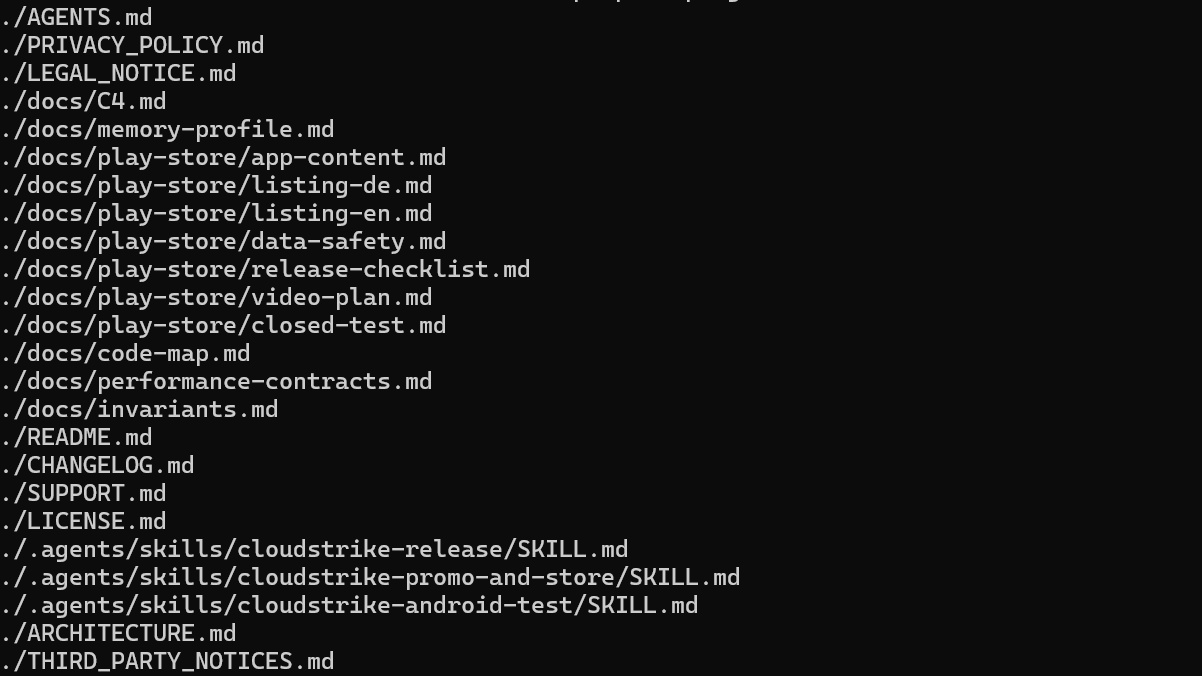
The CLI is only half the equation. To keep light reasoning models like Sol 5.6 light focused, Cloudstrike uses explicit Markdown contracts across the repository:
- invariants.md & performance-contracts.md: Define strict rules for memory allocation, frame budgets (60/120 FPS), and state management.
- docs/code-map.md: Maps out file relationships so the agent does not waste tokens exploring the tree.
- /.agents/skills/: Houses domain-specific instructions for Android builds, Play Store releases, and asset management.
Because the repository context clearly establishes what to do, the model can dedicate its reasoning tokens entirely to how to construct the JSON edit payload. Conclusion
Building a production-ready game does not require expensive enterprise infrastructure or massive fine-tuned models. By shifting execution validation to a fast, local Go tool and structuring codebase context cleanly, a standard $20 subscriber account can outpace heavy agent frameworks in speed, cost, and reliability.
Discussion