
Implementing Jackpot Flick, My Latest Minigame
I’ve played 8 Ball Pool for a long time, and I still look forward to the little pop-up that tells me my daily Lucky Shot is ready. I get one free try to land the gold ball on the target. If I miss the center by an inch, I’m already thinking, “Same angle, a little less power. I have to shoot that again.” It’s one of the few things in a mobile game I’ve actually wanted to spend money on. I’ve bought extra shots just to see if I was right.
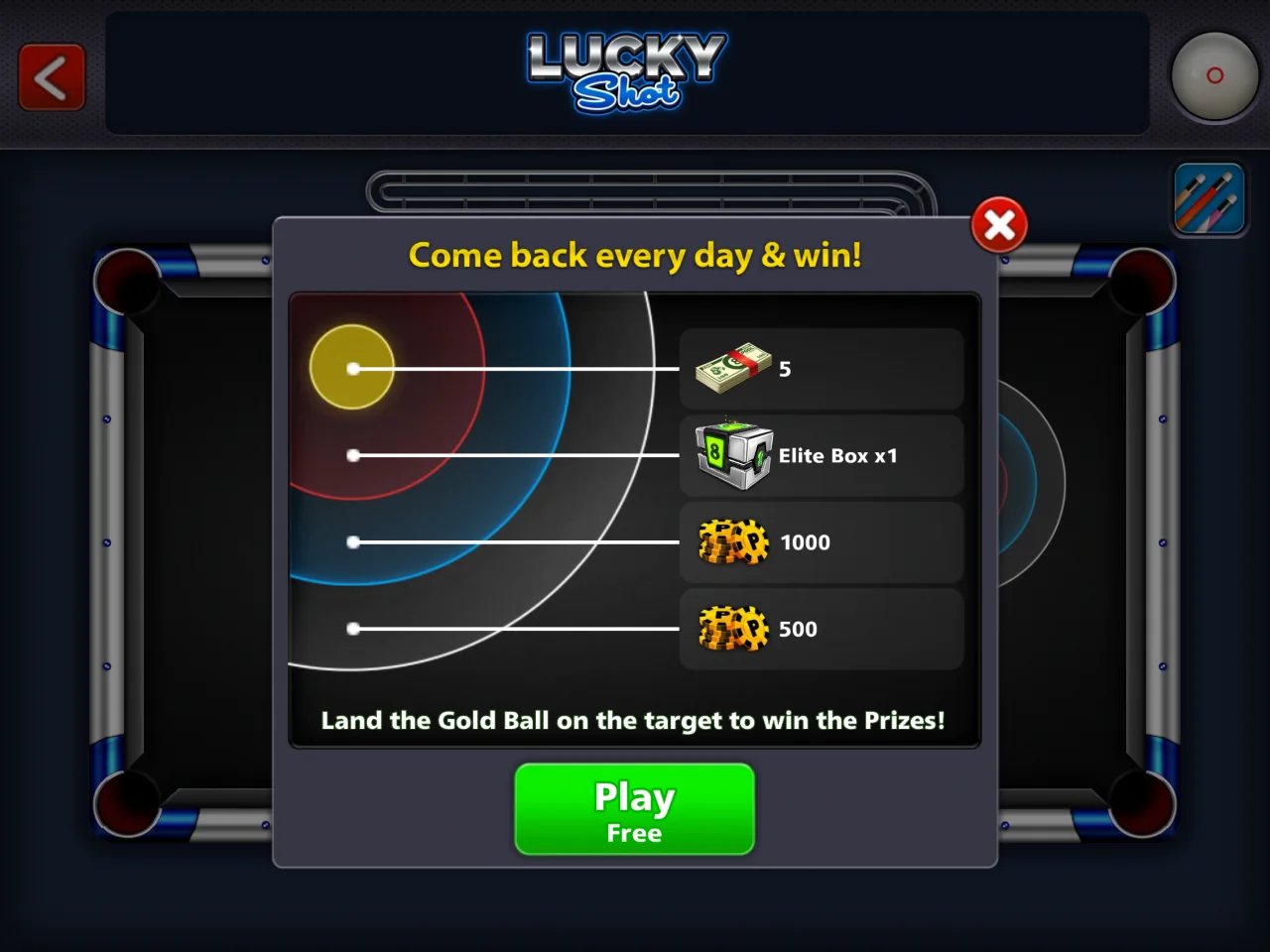
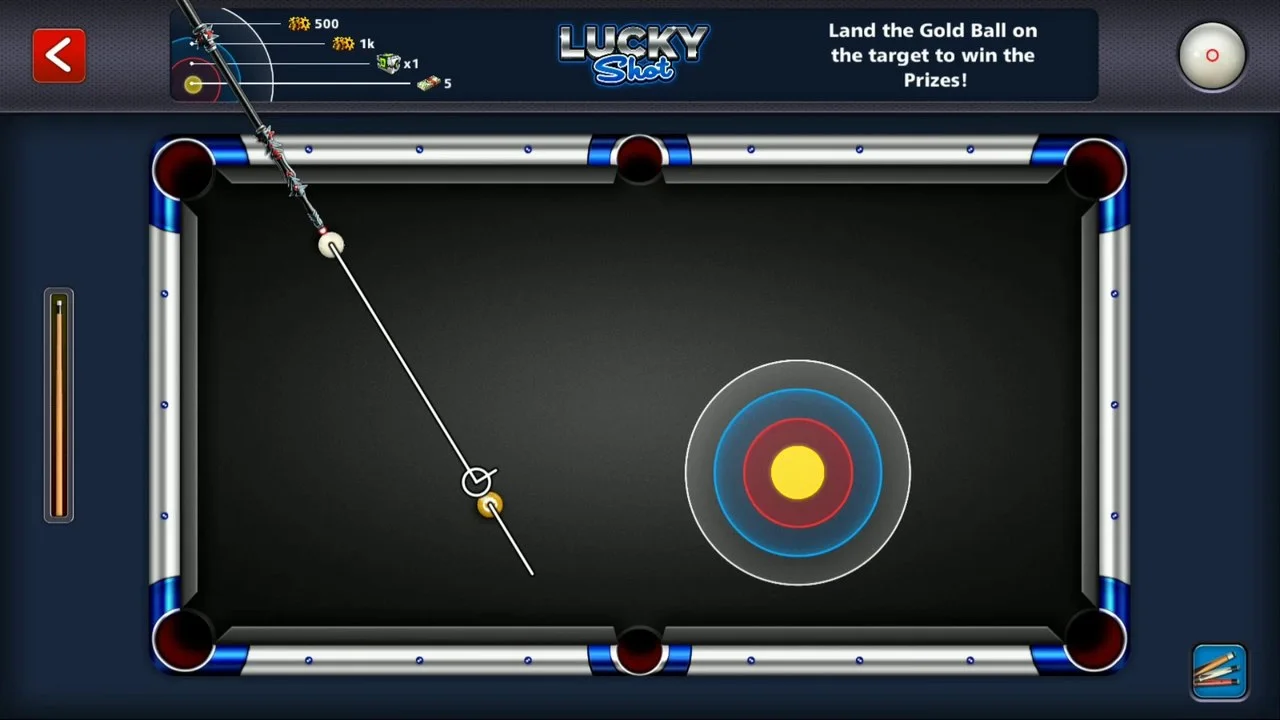
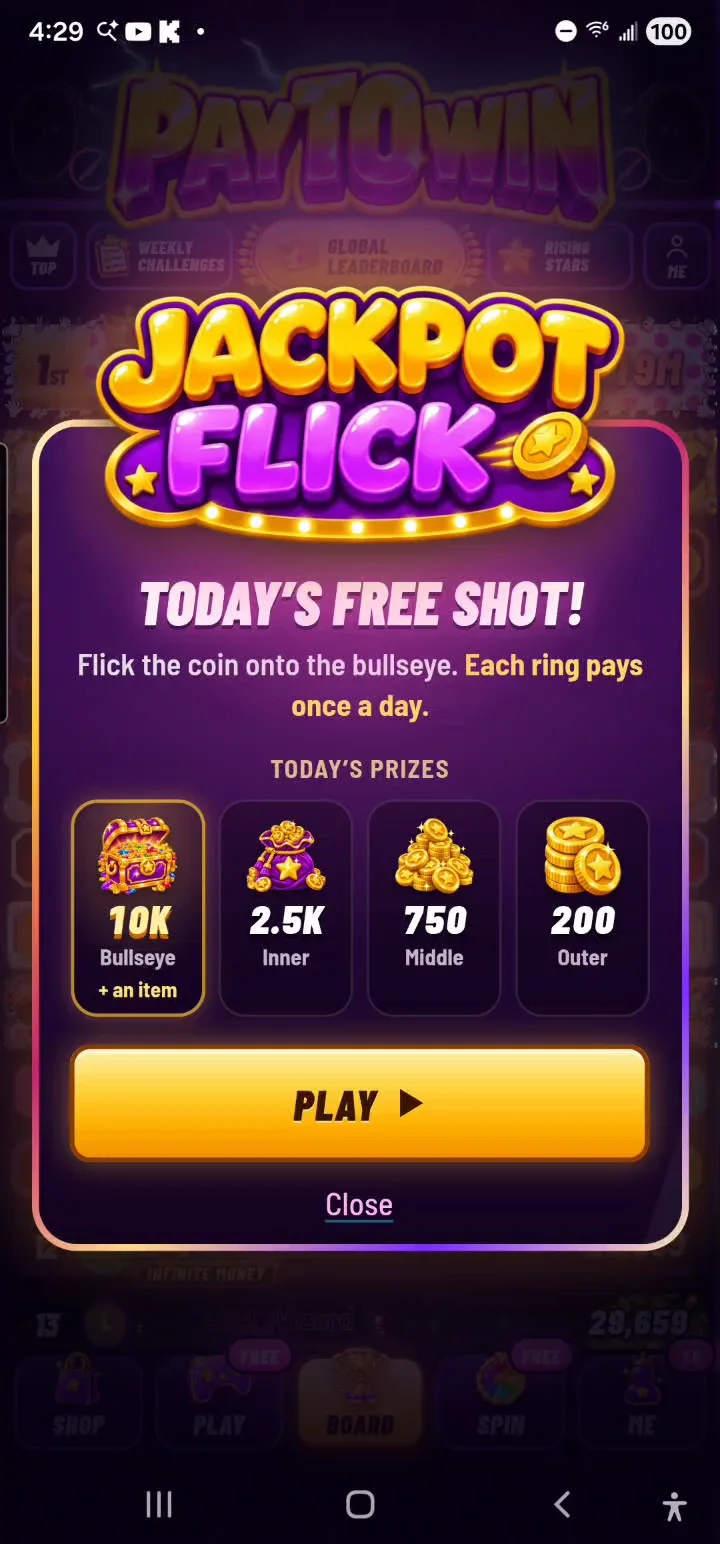
I wanted to bring that feeling to Pay to Win, so I built Jackpot Flick. When your daily shot is ready, a pop-up shows you what each ring is worth and lets you jump straight onto the table. You drag back to aim a gold coin, pull a little farther for more power, and let go. What matters is where the coin stops. Slide through the center and stop on the outer ring, and you get 200 points. Stop on the star and you get 10,000 points plus the day’s featured item. If you want another go, you can buy extra shots and try that same board again.
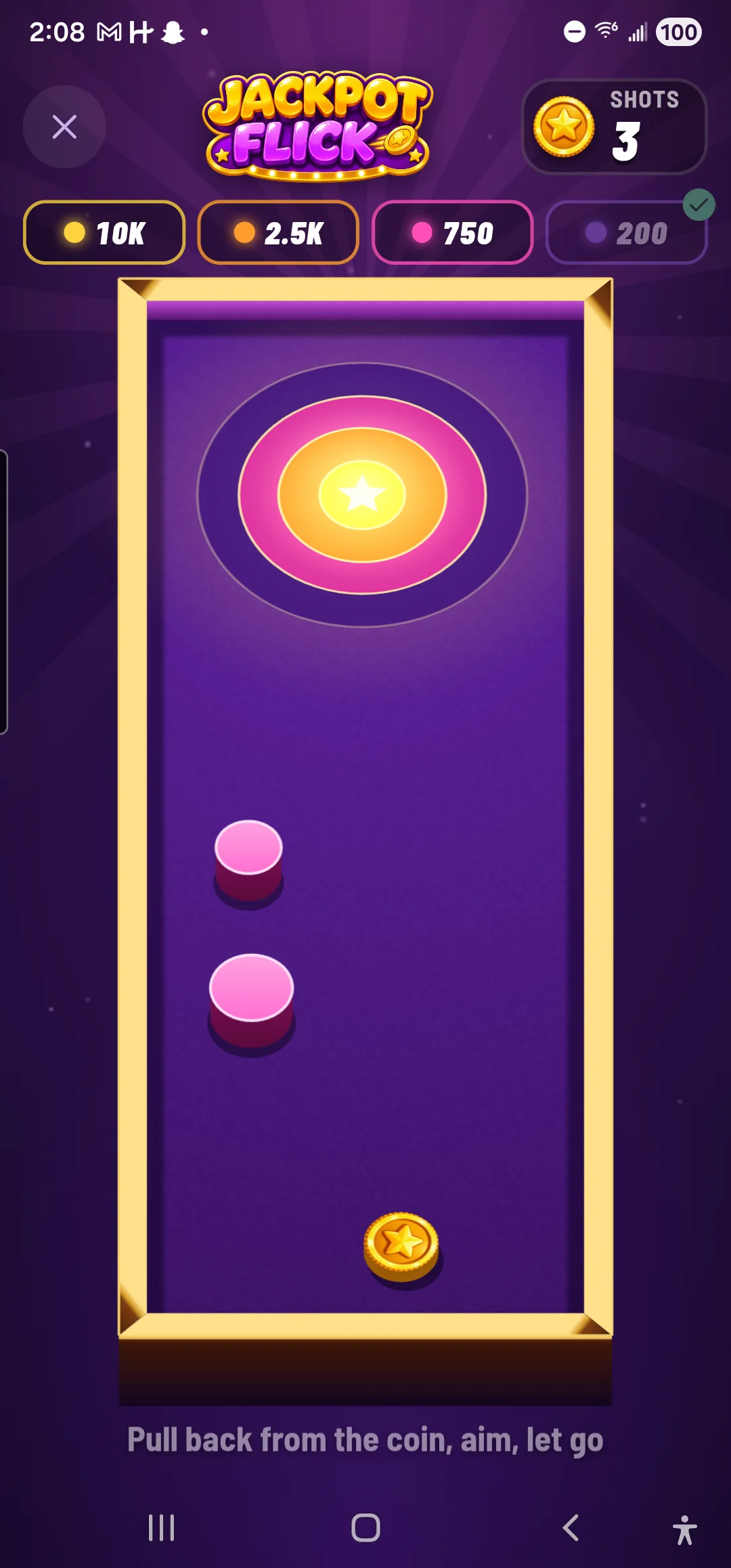
One thing I wanted to do differently was give the table a way to grow with you. Behind the scenes, each player has a skill rating. If two players hit the bullseye today, but one does it on their free shot and the other gets there on their fourth try, those tell me different things. The game weighs the first shot most heavily. It also considers misses, which rings you hit, how tough the table was, and whether you’ve had strong days back to back. Extra shots count when you play them. The purchase itself has no effect on your rating.
Your first board is wide open so you can learn how far the coin slides. After that, the game uses your rating to pick or generate a fresh board each day. You might be lining up a straight shot while someone else is waiting for a moving gate or trying to bank around a bumper. Before a board reaches you, the game checks that there’s a shot that can actually stop on the bullseye.
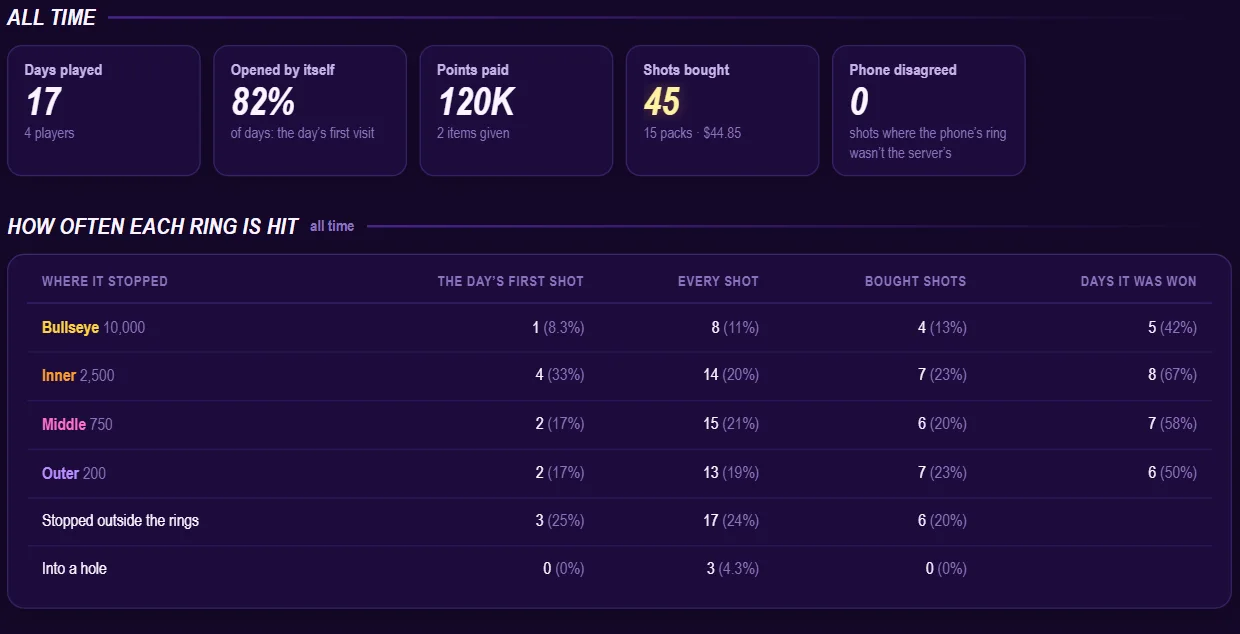
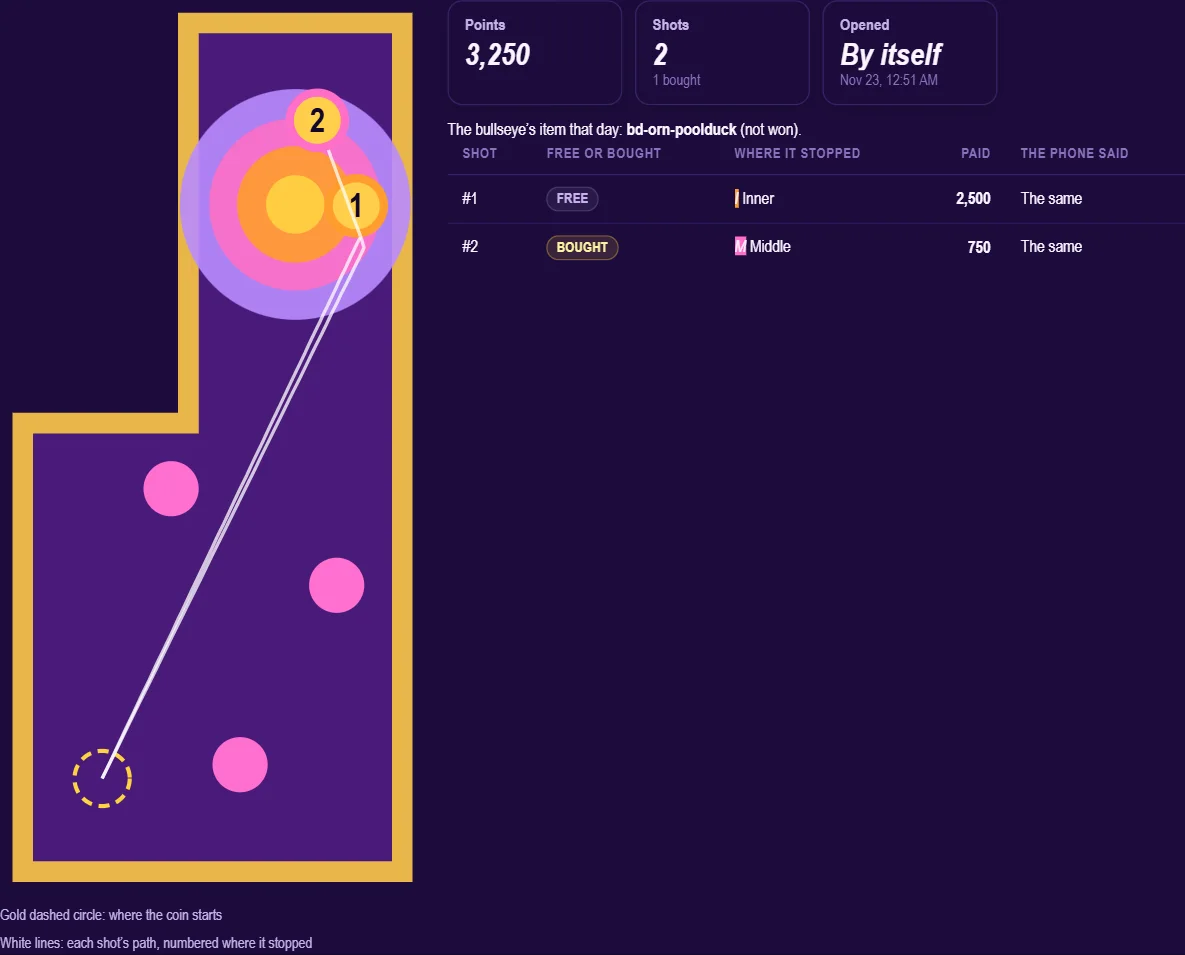
On my end, I can see how often that first free shot scores, how many shots miss, how often people hit the jackpot, and how many extra-shot packs they buy. I can also pull up a table and follow the path of each shot. In the test replay below, the free shot landed on the inner ring for 2,500 points. The retry followed almost the same line, slid a little farther, and stopped on the 750-point ring. That tiny difference in power is exactly what I wanted to be able to see.
Mostly, I want Jackpot Flick to be that little thing you remember about the game the next day. Yesterday’s coin slid just past the star. Today there’s a fresh board and a free shot waiting, and you’ve got a pretty good idea how hard you want to flick.
Discussion