Alpha 5.7 "Terra Firma" — buy land on a planet and build on it
Planetary bases are live. Players can now own ground on a planet and build permanent structures on it, choosing the spot by looking at the real surface in three dimensions and clicking it.
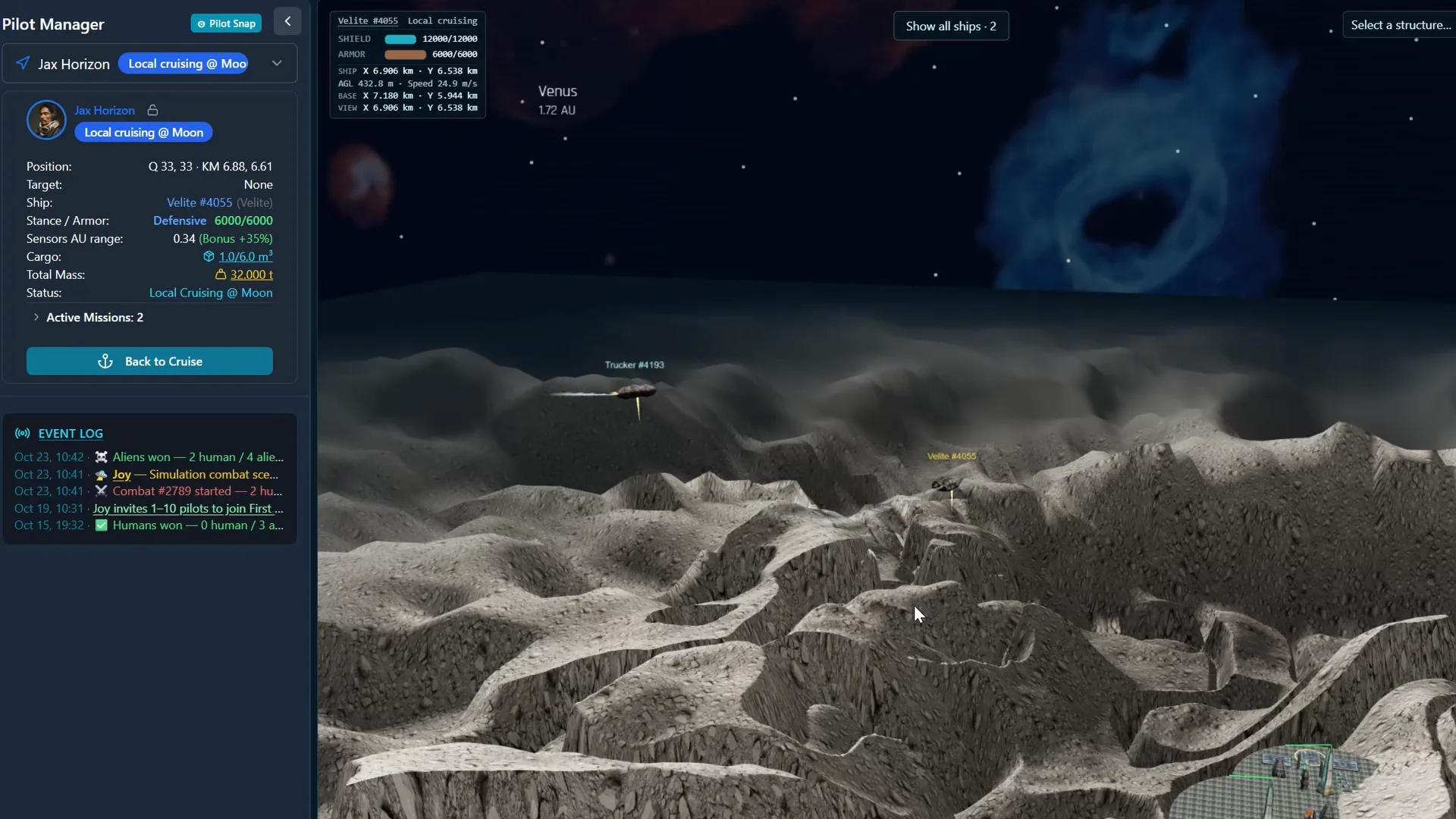
This is the first part of Zero-G rendered fully in 3D and in real time, with other players in it. You fly your ship down, land on your own pad, and watch other ships arrive and leave while you are standing there.
How land works
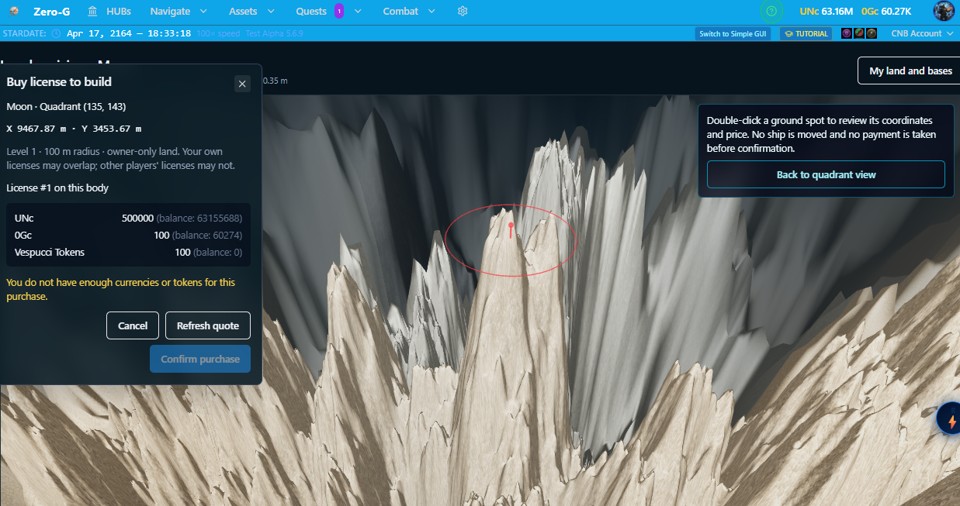
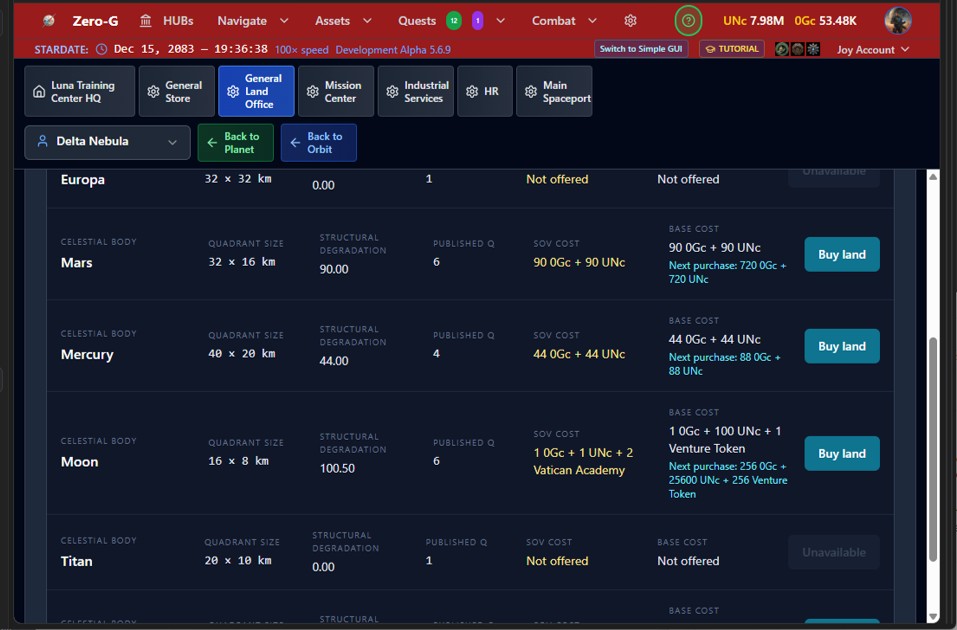
Land is sold as a licence from a General Land Office — there are two, at the Moon HQ and at Ceres Ophir Port. A licence gives you a circle 100 metres across, at coordinates you pick yourself.
You can only buy land in a quadrant that has been published, and a quadrant becomes published when a player fully surveys it and sells that survey data to a land office, making it public for everyone. So every piece of land anyone can buy exists because another player went and found it first.
As of this week: 6,512 quadrants published by 86 pilots, who have been paid 34.5 million credits for the data. Mars alone is divided into 44,944 quadrants. Most of the Solar System is still dark.
Each additional licence on the same planet costs double the one before it. Nobody is buying a planet.
The ground sets the price
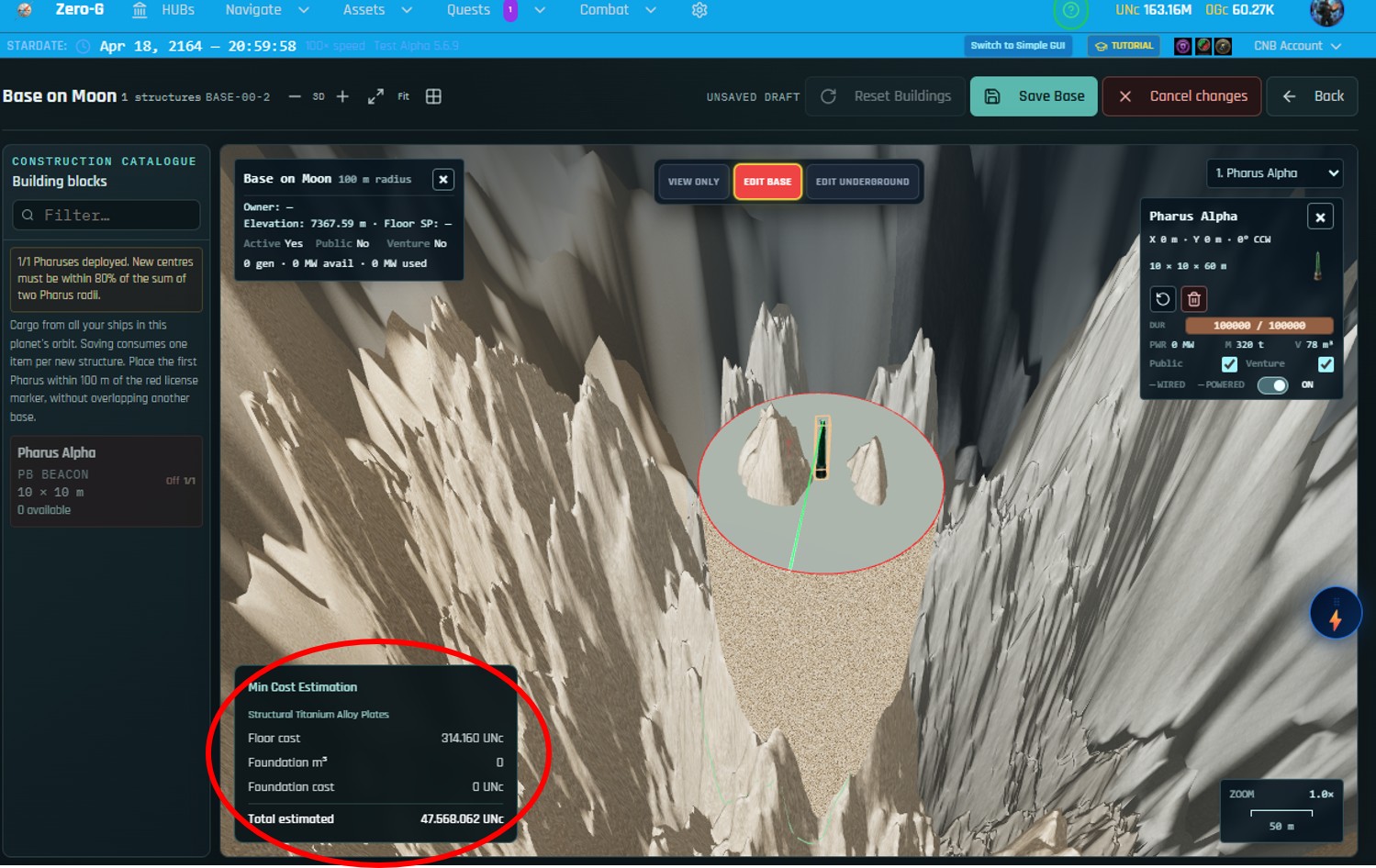
A base stands on a platform, and the platform fills in everything underneath it. On a flat plain that is close to free. On a mountainside almost the whole platform has to be built up from nothing, and the estimate runs into tens of millions.
That turned out to be the most interesting part of the release. Site choice is an engineering decision, not decoration — and one player built on a peak anyway, because it looks extraordinary and everyone can see it.
What a base needs
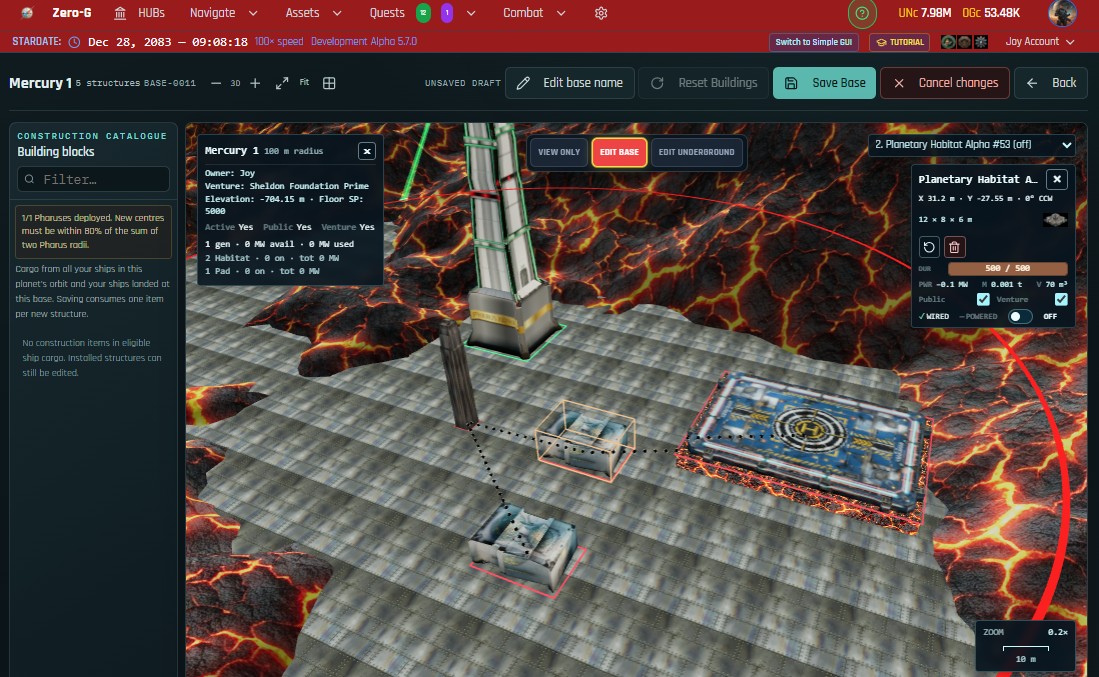
Power, a habitat, a landing pad and a store. The smallest working set is a Fornax Alpha reactor, a Domus Alpha habitat, a Horreum Minus warehouse and a Pulvinar Medium pad, under the Pharus beacon that claims the land. About 143 m³ of cargo in total — one hauler trip.
Pad size decides which ships can land at all, so the base dictates your logistics rather than the other way round.
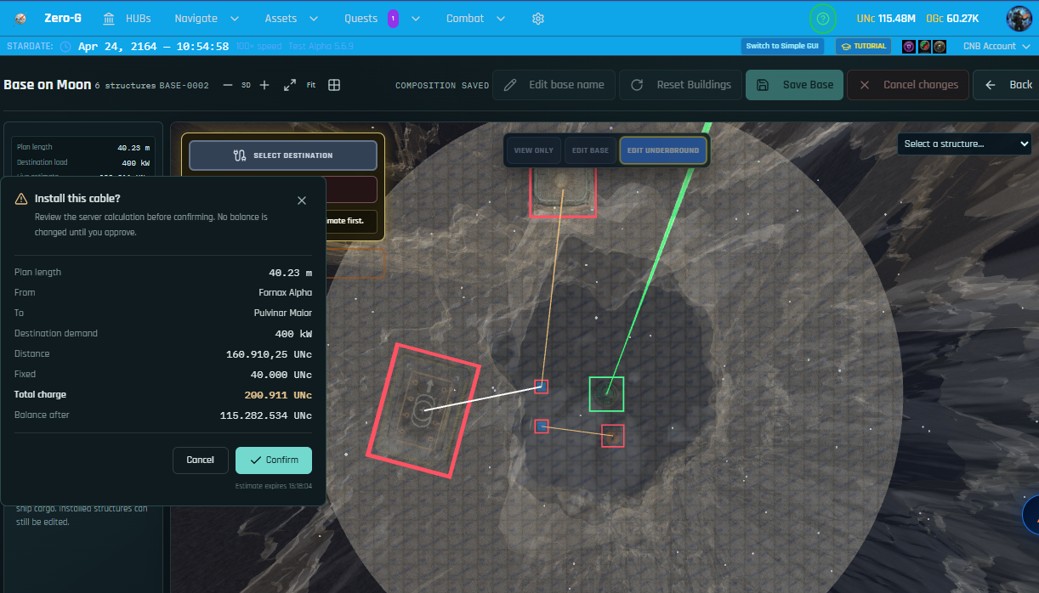
Power has to physically reach each building through cables you lay yourself. Cables are priced by length and by the load at the far end, so a chain is cheap but fails in sequence, and a star costs more and fails gracefully. The layout is a real decision with a cost attached.
Landing, and sharing
You cannot lose a ship landing at a base. Missing the pad or coming in too fast takes shields first and then armour, scaled by mass and speed. Armour stops at 1. There is no destruction.
With a Semita Alpha installed you can drop straight from orbit into the landing approach instead of cruising there.
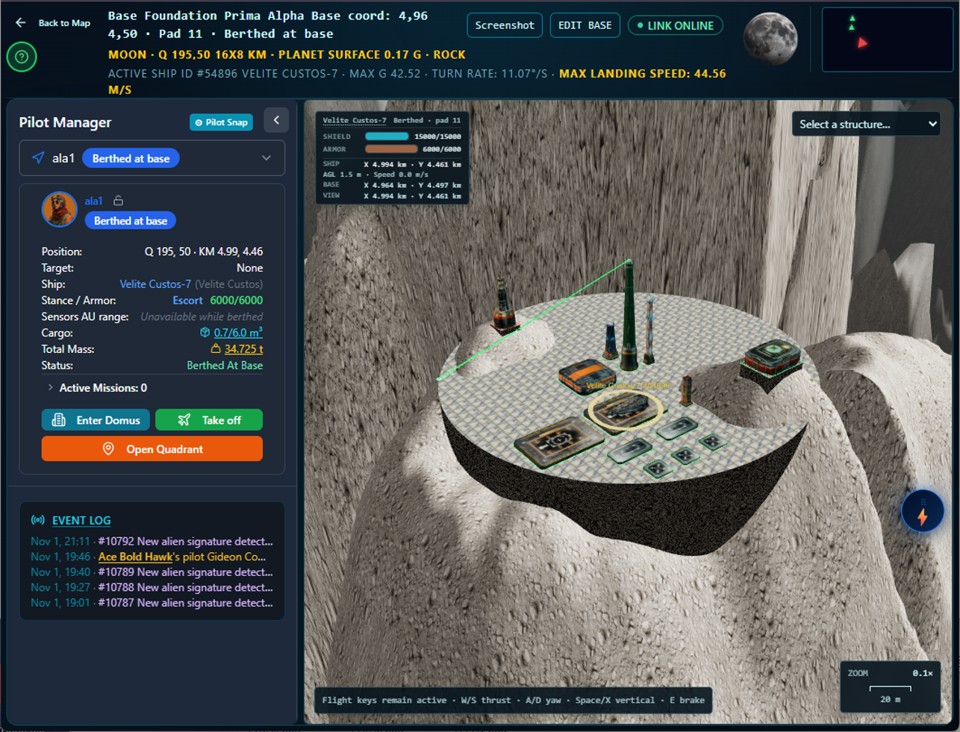
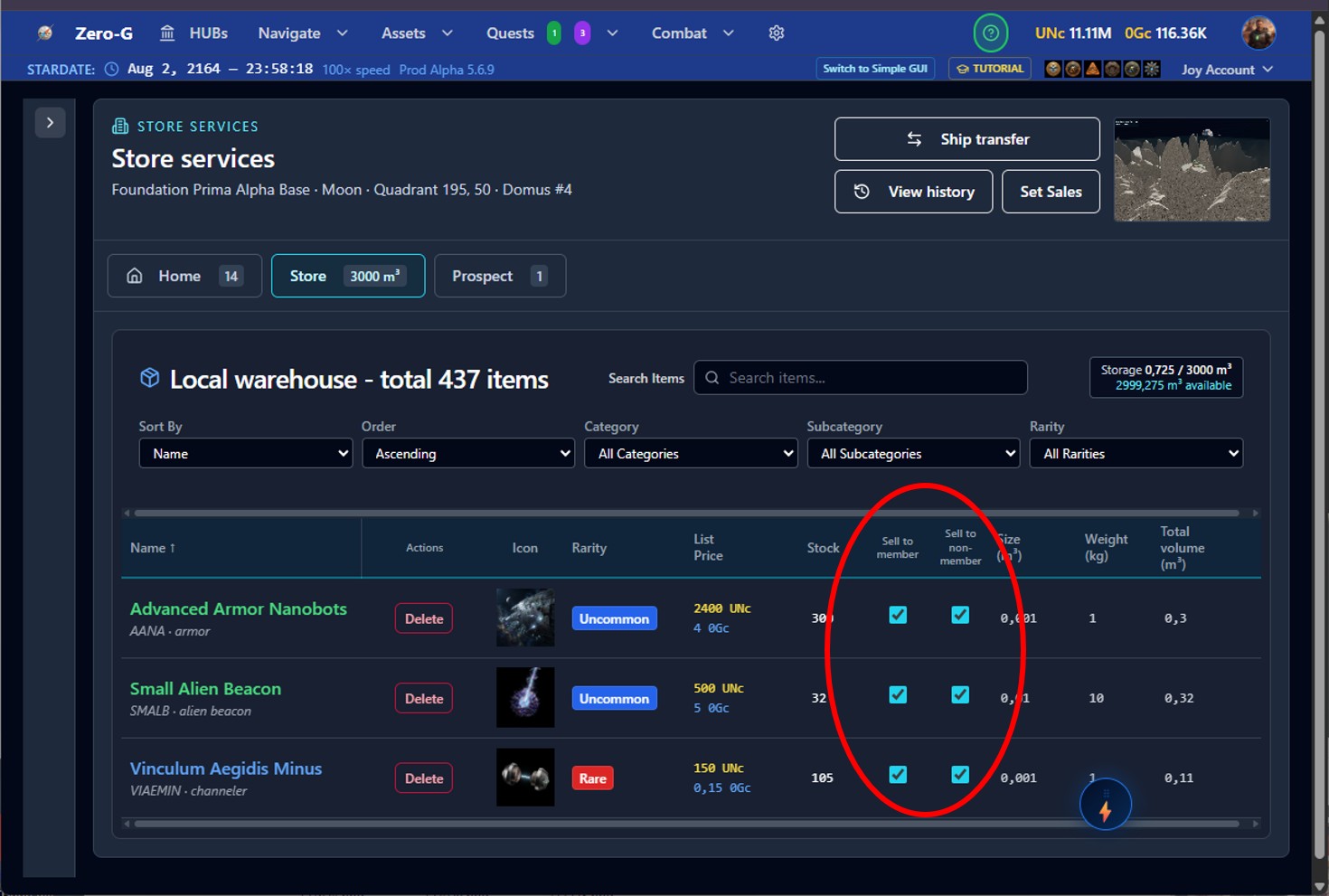
A base can be private, open to your venture, or open to every pilot in the game. Items in a base store can be marked sellable individually, at a discount you set — so an open base becomes a shop other players fly to. Two players have already done exactly that.
Also in this release
New bases are announced in the public log when they are built. The cruise top view now zooms out to twice its previous range, showing up to 2 km across.
The numbers
Zero-G has been running since January 2026 without a single reset — 294 days. 1,882 registered pilots, 24,000 missions completed, 3,544 combat engagements. It is free, runs in a browser tab with nothing to install, and the Solar System is generated at 1:1 scale from real NASA altimetry.
Full guide to the base system, with twenty screenshots: Terra Firma — building your first planetary base
Play: space.zerog.live
Discussion