Chapter 4 — Eye of the Storm
Chapter 4 takes your fleet beyond the last maintained route, into a region where every ship you lose makes the next battle harder.
For this chapter, I wanted the decisions inside a battle to stay with you after the victory screen. Saving a damaged cruiser, bringing an enemy hull under your control, or taking a risky detour should shape the expedition that follows.
That became the foundation of Eye of the Storm: one fleet, far from home, trying to reach answers with whatever survives the journey.
For years, unidentified drones have watched both Federation and Saurian space. Recovered wreckage gave the analysts something to recognize, but nowhere to look. Now a transmission from the Margin Cluster has matched those signatures.
Project LONGSTEP sends an expedition to investigate. Santos has already gone ahead. Your fleet carries an unarmed tender with the receiver needed to establish communications and give future ships a reliable destination. Until that receiver is standing, you have to manage with what you brought.
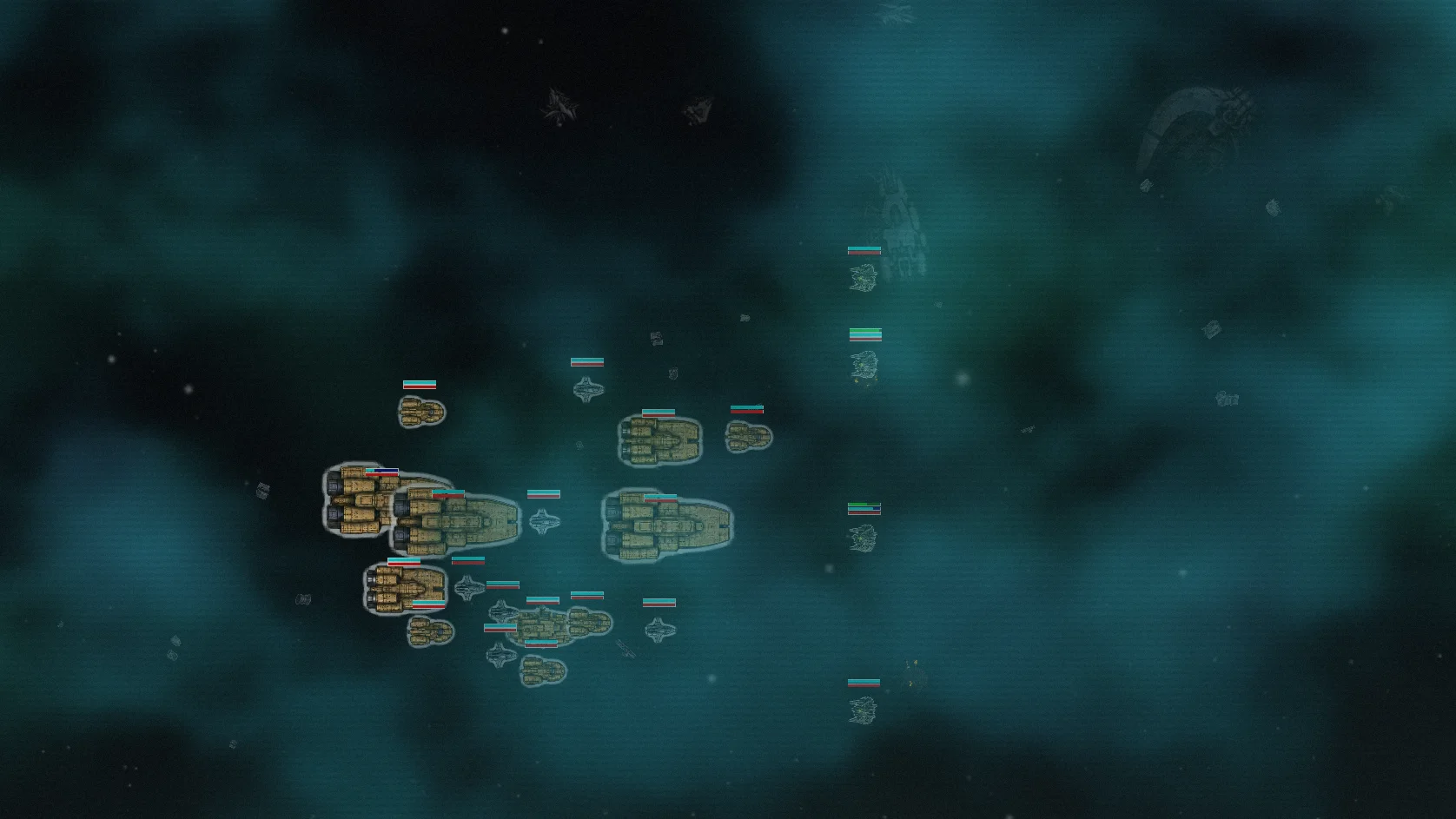
The expedition uses a persistent roster. You choose your starting fleet and difficulty before departure, then carry your surviving ships from mission to mission. Destroyed ships are lost for the run. Captured vessels and rescued reinforcements can join you, changing the fleet as you travel deeper into the cluster.
That changes how a victory feels. Taking a few extra turns to protect an escort might preserve a ship you’ll need several battles later. A captured hull can become an important part of your formation. A force assembled for the opening mission may look very different by the time it reaches its destination.
Those losses belong to the expedition; your saved fleets remain intact. A failed run means starting the chapter again with a fresh departure. You can also stop between missions and continue later. The chapter’s currency and experience rewards come at the finale, while opportunities to strengthen your expedition appear along the way.
There are fourteen missions across the chapter, including optional routes and a hidden encounter. You won’t need to visit every location to reach the ending.
The detours have practical consequences. Some offer a chance to recover ships. Others let you disrupt enemy communications or confront a separate force before it can support a larger defence. Each extra battle puts the current roster at risk, so the route that helped on one expedition may be a poor choice for another.
The opposition also asks you to reconsider familiar habits. Repair craft and coordinated formations can make a fleet much harder to break than its individual ships suggest. Paying attention to how an enemy force works can matter as much as bringing heavier weapons.
I’ve also spent time editing the chapter’s briefings, debriefings and battle dialogue. The aim was to make the officers sound like people working through an uncertain situation. They should react to new information, disagree about a decision, or worry about their crews without explaining shared history to one another for the player’s benefit.
There is still room for bad jokes, professional grudges and quiet moments between engagements. Being a long way from home gives those moments some weight.
New briefing and aftermath illustrations follow the expedition through the cluster, while the star map and battle environments reflect each mission’s setting. The places you pass through should become recognizable parts of the journey.
When you play Chapter 4, I’d like to hear which ships became essential to your expedition—and whether there was a detour you were glad you took, or one you wished you had left alone.
Discussion