
Erwin - A Quantum Puzzle
Media Assets
Game Description
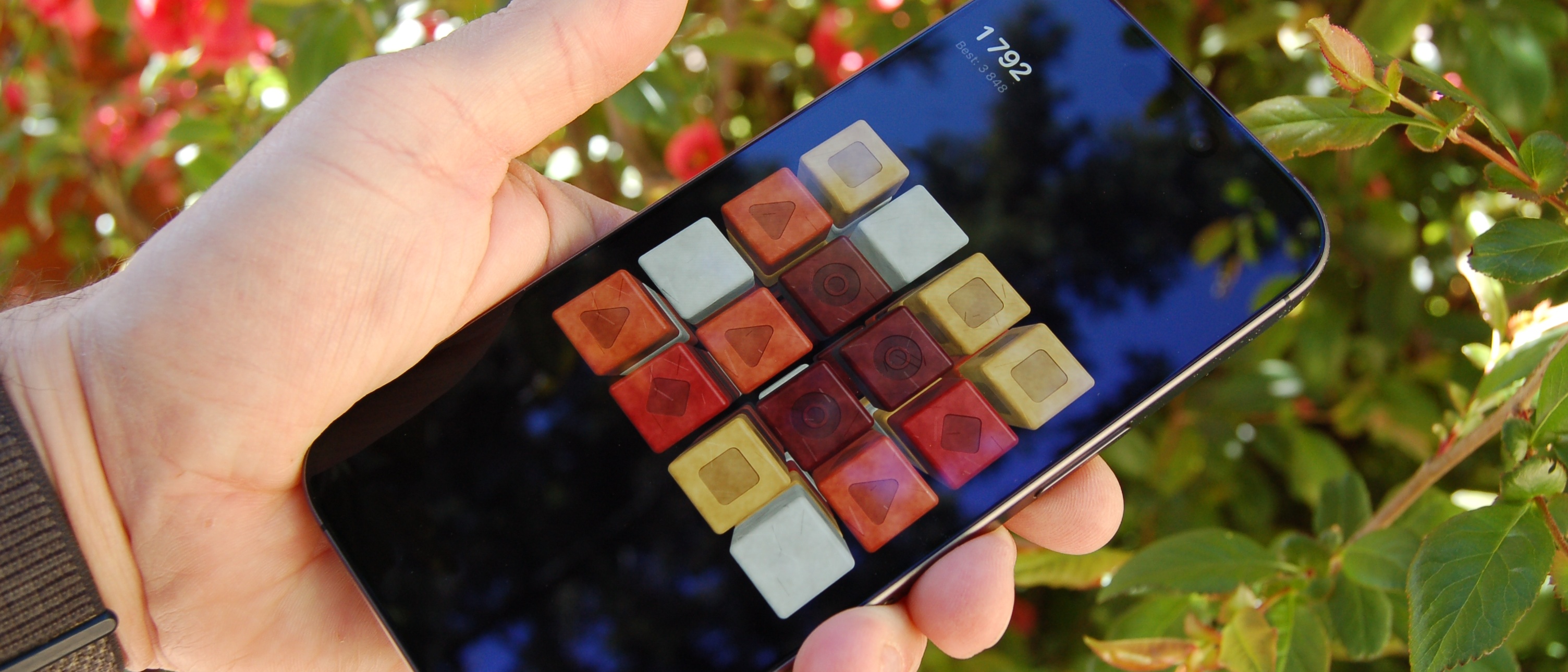
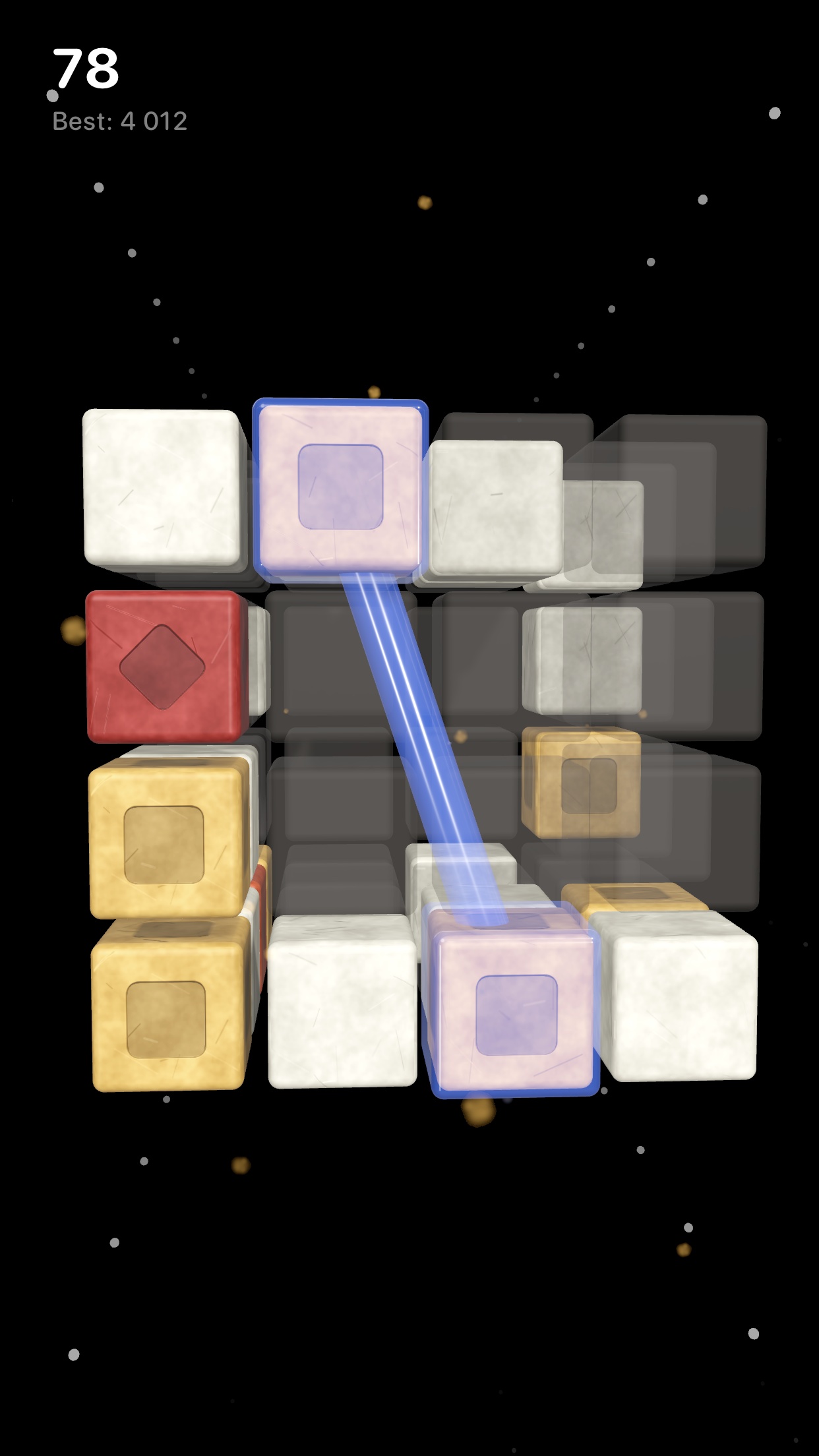
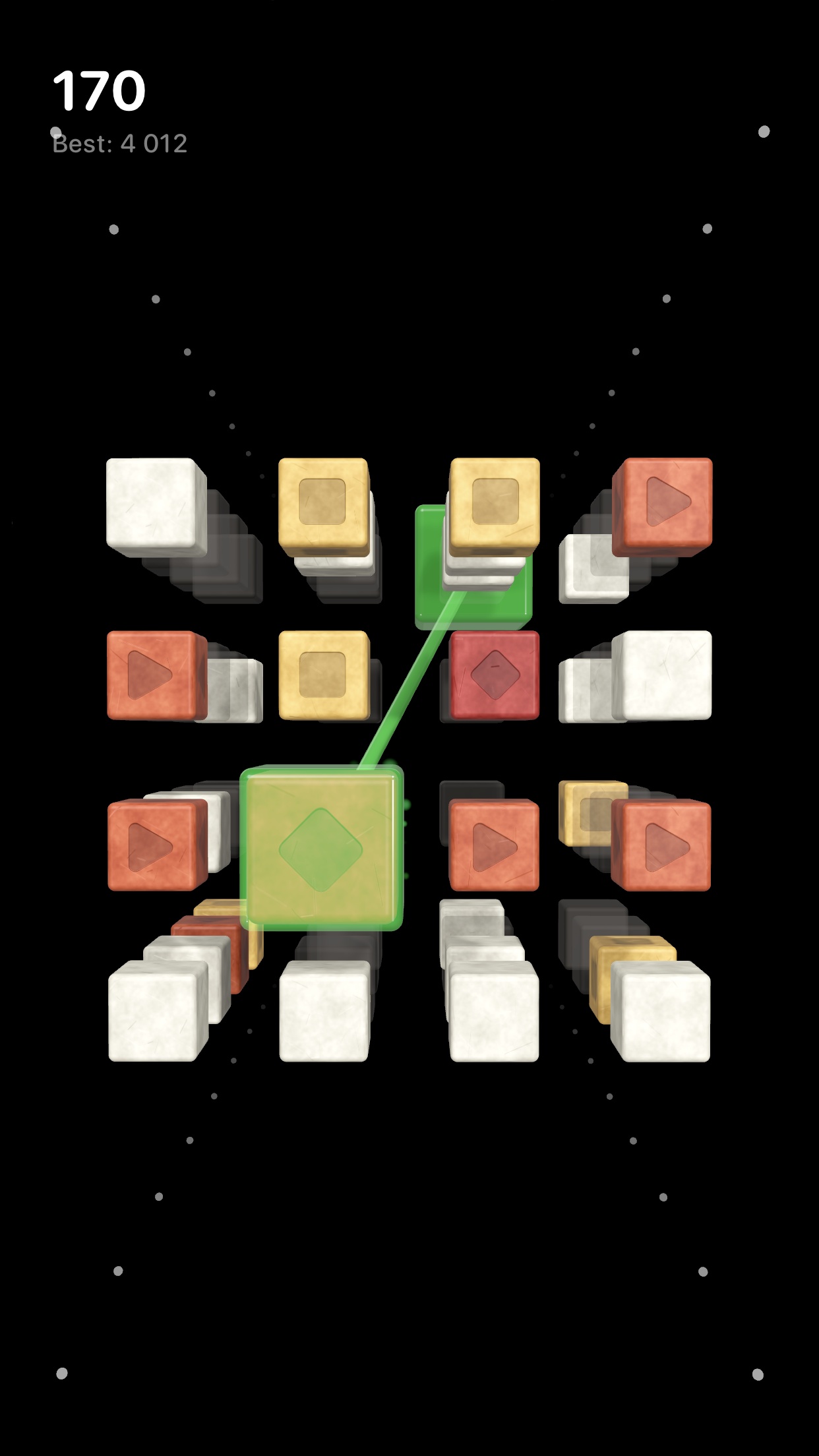
Erwin is a 2048-like sliding merge puzzle played on the surface of a 3D cube, with spatial audio and holographic depth effects. Play long enough and quantum effects begin to appear: some tiles are in superposition, alternating between two values, some entangled and move together, and some even teleport.
What's on the screen
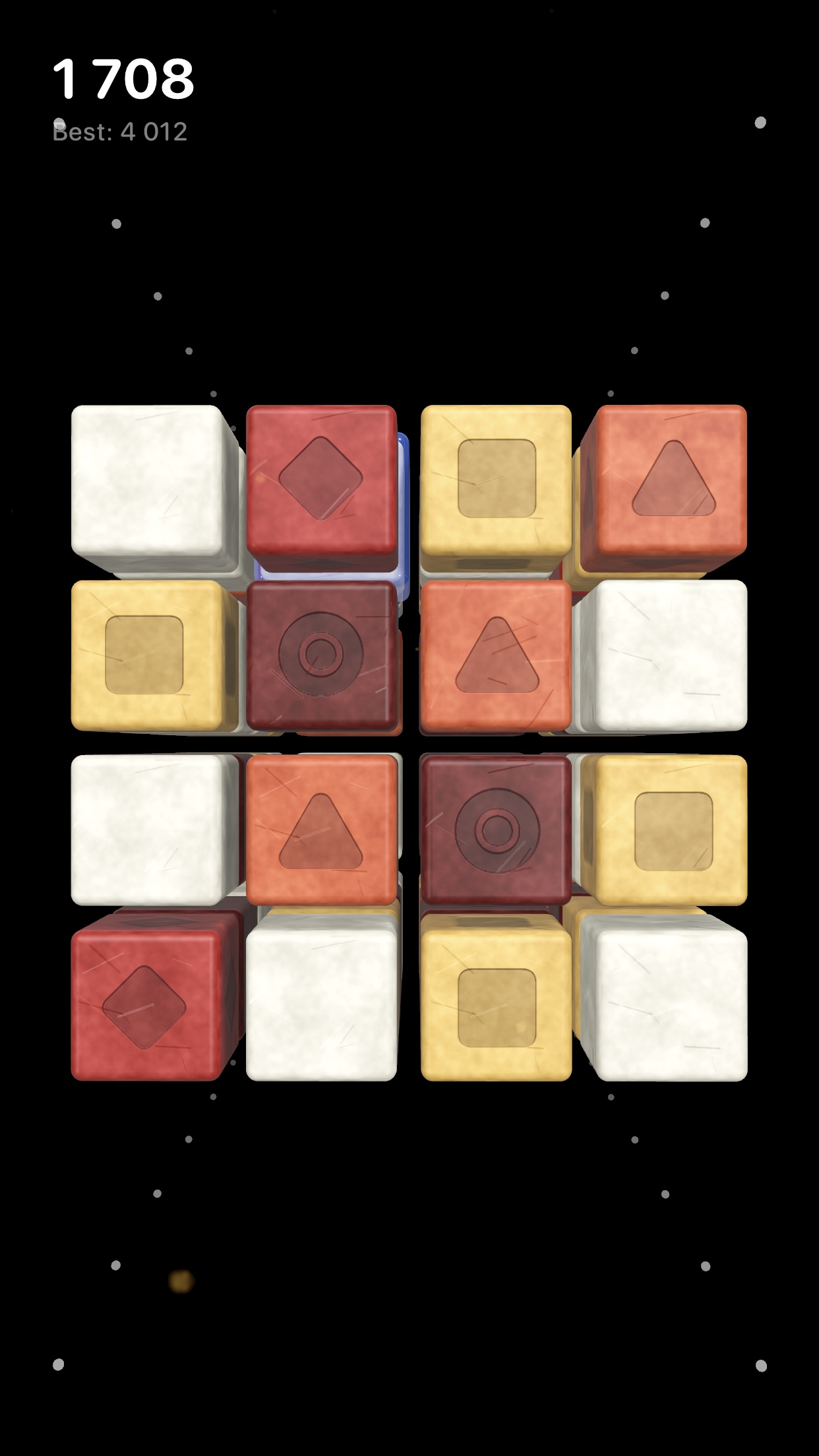
The game shows a 3D cube - similar to a Rubik's Cube - floating in front of a dark background like a hologram. Each of its six faces is a four-by-four grid. Tiles sit in the grid's cells, marked with colors and different shapes indicating their value.
How to play
Tiles can slide across the active, front facing side of the cube. Tiles on the edges of the cube can move on either face. Matching tiles merge into one, and after each move, new tiles appear in random empty cells. Tile values start at 2 and double with each merge: 4, 8, 16, and 32. Each merge adds the new tile's value to your score. The highest valued tiles don't merge, and the cube slowly fills up. The game ends when the cube is full and no more moves are possible. The goal is to reach the highest score you can.
Privacy
Ad-free, tracking-free, so you can enjoy your game without interruptions. Decidedly minimalist - what is absent (load screen, analytics, nagging in-app purchases, notifications, etc) is as intentional as what is present: "a thousand no's" to protect the experience against the dark patterns of the attention economy.
I've built Erwin entirely with Apple's native frameworks, which means no third-party SDK baggage, the app size is less than 50 MB.
Accessibility
You can play Erwin with VoiceOver. The game also supports Voice Control, Reduced Motion, and Dynamic Type; tiles are distinguished by shape in addition to color; there is no time pressure and the game can be paused at any time; and on iPhone it is designed for one-handed play.
Features
Co-op multiplayer via Game Center - play together with friends or auto-matched players, take turns on a shared cube and watch each other's moves in real time.
Offline play - a single-player Erwin game requires no internet connection, you can play whether you are on a subway, or over the Atlantic.
Universal purchase with Family sharing - pay once, and play on all your Apple devices forever, with up to five additional family members.
Tags
Socials
AI Disclosure
Discussion
Badges
Media Assets
Game Description
Erwin is a 2048-like sliding merge puzzle played on the surface of a 3D cube, with spatial audio and holographic depth effects. Play long enough and quantum effects begin to appear: some tiles are in superposition, alternating between two values, some entangled and move together, and some even teleport.
What's on the screen
The game shows a 3D cube - similar to a Rubik's Cube - floating in front of a dark background like a hologram. Each of its six faces is a four-by-four grid. Tiles sit in the grid's cells, marked with colors and different shapes indicating their value.
How to play
Tiles can slide across the active, front facing side of the cube. Tiles on the edges of the cube can move on either face. Matching tiles merge into one, and after each move, new tiles appear in random empty cells. Tile values start at 2 and double with each merge: 4, 8, 16, and 32. Each merge adds the new tile's value to your score. The highest valued tiles don't merge, and the cube slowly fills up. The game ends when the cube is full and no more moves are possible. The goal is to reach the highest score you can.
Privacy
Ad-free, tracking-free, so you can enjoy your game without interruptions. Decidedly minimalist - what is absent (load screen, analytics, nagging in-app purchases, notifications, etc) is as intentional as what is present: "a thousand no's" to protect the experience against the dark patterns of the attention economy.
I've built Erwin entirely with Apple's native frameworks, which means no third-party SDK baggage, the app size is less than 50 MB.
Accessibility
You can play Erwin with VoiceOver. The game also supports Voice Control, Reduced Motion, and Dynamic Type; tiles are distinguished by shape in addition to color; there is no time pressure and the game can be paused at any time; and on iPhone it is designed for one-handed play.
Features
Co-op multiplayer via Game Center - play together with friends or auto-matched players, take turns on a shared cube and watch each other's moves in real time.
Offline play - a single-player Erwin game requires no internet connection, you can play whether you are on a subway, or over the Atlantic.
Universal purchase with Family sharing - pay once, and play on all your Apple devices forever, with up to five additional family members.